Newsletter

4th Newsletter LIFE Multi-AD 4 AgroSMEs

LIFE Multi-AD 4 AgroSMEs: High performance multiphase anaerobic reactor for agroindustrial wastewater treatment


UPSCALING – COMPUTATIONAL SIMULATION SUPPORT ON INDUSTRIAL SCALE DESIGN
Multi-AD 4 AgroSMEs Project was born from the anaerobic multiphase reactor patented by AEMA. This technology was experimentally tested at a 0.1 m3pilot scale prototype giving promising results regarding efficiency, environmental impact and costs. One of the objectives of the project is the development of a new design based on AEMAs prototype and adequate for its operation at the industrial scale. This upscaling process was supported by Computational Fluid Dynamic (CFD) modeling, a technique that provides information about the performance of a new design prior to its construction.

Computational Fluid Dynamics (CFD) makes use of numerical methods and algorithms to solve problems regarding fluid mechanics that is the physics branch studying the liquid and gaseous movement and the forces causing them. ITAINNOVA has wide experience on CFD modeling and simulation and its application on industry for virtual sensoring, model based control, process optimization and product design.

Anaerobic reactors for wastewater hydrolysis, acidogenesis, acetogenesis and methanogenesis. The organic matter contained in the water (liquid) is put into contact with the biomass (solid particles) to degrade it and generate biogas (gas). An adequate mixing of liquid and solid particles is essential to achieve high reaction yields. Multi-AD reactor takes advantage of the turbulence created by geometry to provide mixing avoiding the use of mechanical stirring.

The upscaling of the process made it necessary the modification of the pilot plant design to adapt it to industrial plants characteristic requirements. Structural limitations, safety and economical efficiency goal were the main challenges tackled in the reactor redesign process. It was accomplished in three steps: i) the acquisition of knowledge about pilot plant performance (specially the mixing level), ii) the proposal of design modifications meeting the industrial size requirements and iii) the evaluation of the new design mixing level. CFD models and simulations were key tools in all these steps.

A complete Multi-AD reactor model comprises a multiphase (solid particles, liquid and gas) model, a turbulence model, and solving biochemical reactions together with energy and species transport equations. This complexity makes the model computationally demanding and, thus, the simulation becomes time consuming. During the upscaling, several geometries had to be tested. This kind of complex model was therefore incompatible with a quick design procedure.

A methodology was developed to address this issue. Different models were implemented to adapt their features, mainly accuracy and computation demand, to the agility required in each part of the process. The model was modified into three levels of simplification concerning the mesh, the number of phases involved, and the phenomena studied. The complex pilot plant model was used to determine the accuracy of each simplification and the parameters indicating good mixing and adequate performance.

The simplest model permitted fast geometry modification and real time simulation. It was used in an initial screening of multiple different designs. Results provided no accurate values but trends indicating the most promising geometries. This selection was simulated and analyzed using the subsequent level of simplification models to obtain quantitative results and determine the most adequate design.

The selected reactor represents a balance among performance, construction viability and costs. It is already installed in the demonstration plant and will be tested within the Multi-AD 4 AgroSMEs project during the next months.


THIRD GENERAL ASSEMBLY: THE PARTNERS OF THE LIFE MULTI-AD PROJECT PRESENT THEIR TECHNICAL ADVANCES TO THE NEEMO MONITORING TEAM.
The partners of the European project LIFE Multi-AD 4 AgroSMEs (LIFE17 ENV / ES / 000331), made up of AEMA (Water, Energy and Environment Servicios Integrales SLU), I&S (Institutions & Strategies), ITAINNOVA (Instituto Tecnológico de Aragón), SIS (Societatea de Inginerie Sisteme SA) and EGA(Energygreen Gas Almazán SL), have held a new working meeting to show the progress and results of this initiative. The meeting was attended by the Executive Agency for SMEs (European Commission) through a representative of NEEMO and project monitor, Mariona Salvatella.

During the meeting, which was held online, the results of the different actions carried out during the last nine months were presented. In addition, it has been used to make a virtual visit to the demonstration prototype, which is in the construction phase. During the visit, the progress in the assembly of the different elements that make up the demonstration unit was shown, as well as the current WWTP, based on an aerobic process, which will be used as a base scenario to evaluate the technical, economic and environmental feasibility of the LIFE Multi-AD technology solution.

At large ranges, the LIFE Multi-AD 4 AgroSMEs project aims to design and industrialize a high-performance multi-stage anaerobic reactor, adapted to treat wastewater generated in small and medium-sized enterprises (SMEs) of the agri-food industry (F&D). This project, which has a budget of € 2,177,143.00, is 60% co-financed by the LIFE program of the European Commission. The LIFE program is the EU funding instrument for the environment and climate action created in 1992.

LIFE MULTI-AD 4 AGROSMES PROJECT PARTICIPATED IN THE WCCM-ECCOMAS CONGRESS 2020
Instituto Tecnológico de Aragón (ITAINNOVA) presented part of the work carried out within LIFE Multi-AD project in the WCCM-ECCOMAS congress 2020, which took place in digital version from January 11 to 15, 2021.

Cristina Bengoechea Cuadrado, researcher in Instituto Tecnológico de Aragón (ITAINNOVA), presented the LIFE Multi-AD Project in the joint 14th World Congress in Computational Mechanics and ECCOMAS Congress 2020, virtually held last 11–15 January 2021. The congress was one of the largest international applied mathematics and computational mechanics events, in which participated more than 3000 people from different sectors, industry, academia and government institutions.

In the talk it was presented a multifidelity simulation methodology to facilitate and speed up the design stage of wastewater treatment reactors, developed by ITAINNOVA within the EU-funded LIFE Multi-AD project. The talk was included in the minisymposium “Efficient Methods for Multi-Disciplinary Optimisation, Probabilistic Design and Optimisation under Uncertainty”.


LIFE MULTI-AD CONTRIBUTES TO THE UNITED NATIONS SUSTAINABLE DEVELOPMENT GOALS
On September 25, 2015, the 193 countries that make up the United Nations committed to the SUSTAINABLE DEVELOPMENT GOALS (SDGs) and their fulfillment by 2030.

The goals pursue equality among people, protect the planet and ensure prosperity as part of a new sustainable development agenda. A new global social contract that leaves no one behind.

The 2030 Agenda for Sustainable Development proposes 17 Sustainable Development Goals with 169 goals of an integrated and indivisible nature that cover the economic, social and environmental spheres.


The development and industrialization of the innovative technological solution LIFE Multi-AD, capable of treating and recovering the wastewater of agro-food SMEs producing biogas, will directly contribute to the achievement of the SDGs:


06.   Ensure the availability and sustainable management of water and sanitation for all. The LIFE Multi-AD technological solution will treat wastewater through the application of an anaerobic system, a process considered one of the most sustainable alternatives in wastewater treatment.

07.   Ensure access to affordable, reliable, sustainable and modern energy for all. The anaerobic LIFE Multi-AD process will enhance the organic load of the wastewater by producing biogas, which will be used as a renewable energy source, reducing the Carbon Footprint.

08.   Promote sustained, inclusive and sustainable economic growth, full and productive employment, and decent work for all. The innovative LIFE Multi-AD solution is being developed by a European consortium of 5 companies from Spain, Romania and France.

09.   Develop resilient infrastructure, promote inclusive and sustainable industrialization, and foster innovation. LIFE Multi-AD will industrialize a high performance high performance multi-stage anaerobic reactor, based on the AEMA patent (ES-2541078), which will be fully automated.

11.   Make cities and human settlements inclusive, safe, resilient and sustainable. The LIFE Multi-AD solution, with a treatment capacity of up to 120 m3 / day, will be demonstrated its technical, economic and environmental viability in a DOCa Rioja winery (Spain).

12.  Guarantee sustainable consumption and production patterns. LIFE Multi-AD will contribute to the development of strategies on efficiency in the use of resources based on the framework of production models under Circular Economy.

PROJET LIFE MULTI-AD: NETWORKING ACTIVITY
Within the framework of the networking activities of the LIFE Multi-AD AgroSMEs, project, Jose B. Carbajo attended the final session of the iCirBus-4Industries as its representative, which took place on December 4 in virtual mode.


LIFE iCirBus-4Industries puts into practice the concept of circular economy through actions focused on the cascading use of waste from regional biomass energy and water treatment industries, to become new validated green products for materials industries construction and fertilizers.


The day, in addition to being a showcase to show the main results achieved by iCirBus-4Industries, served as a meeting forum between different European consortia. Especially interesting has been the networking carried out with projects based on anaerobic technologies such as LIFE Anadry or those whose objective is the recovery of waste from the agri-food industry (e.g., LIFE Brewery).


There is no doubt that thanks to the support of the European Commission through the LIFE program there is a wide network of projects developing in favor of the environment and the circular economy.

ANAEROBIC SYSTEMS: A STEP FORWARD IN PROGRESS TOWARDS A SUSTAINABLE WASTEWATER TREATMENT
Anaerobic  process is considered one of the most sustainable alternatives for wastewater treatment. Low energy use, low sludge production, small reactor surface area, low consumption of nutrients compounds and reduced operating expenses are some of the advantages that anaerobic process has over conventional aerobic process based on activated sludge.

The activated sludge process is a type of wastewater treatment process for treating wastewaters using aeration and a biological floc. This community of microorganism is capable to oxidize organic pollutant into carbon dioxide and water.. Aerobic process implies high energy requirement, 0.7 – 1 kWh/kg COD, and low organic load rates, 0.5-2.0 kg COD/m3·d.

On the other hand, in anaerobic process, anaerobic microorganisms (specific to oxygen-free conditions) are selected for their ability to degrade organic matter present in wastewater. More precisely, organic pollutants are converted into biogas (methane + carbon dioxide) and a small amount of biosolids. In this wastewater systems, energy used could be reduced up to 10 times in comparation with aerobic process (0.07 – 1.0 kWh/k DQO) as aeration is not required. Moreover, biogas, methane-rich gas, may be used as renewable energy source, which reduces the energy demand of wastewater process.


Comparative balance of aerobic and anaerobic wastewater treatment processes


It is important to highlight that the organic load rates used in anaerobic process can reach up to 25 kg COD/m3·d, which allows the treatment of biodegradable wastewater with a high COD concentration, as well as reducing the reactor surface area.

Finally, anaerobic process also has the advantage of being able to value the granular biomass produced in the market, as sowing in reactors for the start-up of other plants, thus significantly reducing the cost associated with sludge treatment.
Synergistic binomial of biological processes: anaerobic + aerobic
Although anaerobic systems may be capable of treating wastewater with higher organic loads than aerobic ones, they have a limited capacity both for the removal of nutrients (ie, nitrogen and phosphorus) and for the refining of organic matter in the effluent (ie, COD removal yields <90%).

It is therefore evident that an effective and efficient treatment of industrial wastewater with a high biodegradable organic load with discharge into the water bodies should be carried out through the synergistic combination of the two biological  processes:

Anaerobic, as a roughing treatment and recovery of organic matter in an energy source such as biogas.
Aerobic, as a process for polishing the COD and removing the nutrients to fulfillthe limits established in the wastewater discharge authorization.


Balance of the mixed wastewater treatment system: anaerobic + aerobic. Photo La Zaragozana (Ambar), success story of EDARi built and operated by AEMA


A case of success in the brewing sector for the treatment of wastewater using mixed anaerobic + aerobic technology is the Spanish brewery located in Zaragoza, La Zaragozana (Ambar). The WWTP of the aforementioned beverage company, built and operated by AEMA, is capable of treating 3,270 m3 of wastewater daily, producing about 5,000 m3 of biogas. The biogas is energetically valued in the facility itself, taking advantage of its calorific power, which contributes positively to the reduction of the brewery’s carbon footprint.

 
LIFE Multi-AD technology solution
The LIFE Multi-AD project is developing and industrializing an innovative technological solution based on the design of a high performance multi-stage anaerobic reactor patented by AEMA. The demonstration  project will help as a technological lever to advance the synergistic combination of anaerobic and aerobic purification systems.

The LIFE Multi-AD project will reduce the environmental impact of food SMEs as well as the operating expenses derived from treatment. The technological solution will reduce  the organic load of the wastewater, producing biogas, which will be used as a source of renewable energy, thus saving natural resources and reducing the carbon footprint.

The LIFE Multi-AD project is supported 60% by the LIFE + ENVIRONMENT program of the European Commission and is coordinated by AEMA, as an expert in industrial wastewater treatment technologies. Also involved in the consortium ITAINNOVA, technological center of reference in technological innovation, SIS, company that provides solutions in the field of industrial automation, EGA, specialist in the management and recovery of organic waste through anaerobic digestion and I&S, consultant and advisor in communication of European and international projects..

 

Posted by Pascal Pierre
Newsletter

Buletinul nr. 4: LIFE Multi-AD 4 AgroIMM

LIFE Multi-AD 4 AgroSMEs: Reactor anaerob multifazic de înaltă performanță pentru tratarea apelor uzate agroindustriale 


UPSCALING – SUPORT DE SIMULARE COMPUTAȚIONALĂ PENTRU PROIECTARE LA SCARA INDUSTRIALA
Proiectul Multi-AD 4 AgroSMEs a luat naștere din reactorul anaerob multifazic brevetat de AEMA. Această tehnologie a fost testată experimental pe un prototip la scară pilot de 0,1 m3 avand rezultate promițătoare în ceea ce privește eficiența, impactul asupra mediului și costurile. Unul dintre obiectivele proiectului este dezvoltarea unui nou design bazat pe prototipul AEMA și adecvat pentru funcționarea acestuia la scară industrială. Acest proces de upscaling a fost susținut de modelarea Dinamica fluidelor computaționale (CFD), o tehnică care oferă informații despre performanța unui nou design înainte de construirea acestuia.
Dinamica fluidelor computaționale (CFD) folosește metode numerice și algoritmi pentru a rezolva probleme legate de mecanica fluidelor, ramura fizicii care studiază mișcarea lichidelor și gazoase și a forțelor care le provoacă. ITAINNOVA are o vastă experiență în modelarea și simularea CFD și aplicarea acesteia în industrie pentru senzori virtuali, control bazat pe modele, optimizare a proceselor și proiectare de produse.
Reactoare anaerobe pentru hidroliza apelor uzate, acidogeneza, acetogeneza si metanogeneza. Materia organică conținută în apă (lichid) este pusă în contact cu biomasa (particule solide) pentru a o degrada și a genera biogaz (gaz). O amestecare adecvată a particulelor lichide și solide este esențială pentru a obține randamente mari de reacție. Reactorul Multi-AD profită de turbulența creată de geometrie pentru a asigura amestecarea evitând utilizarea agitației mecanice.
Creșterea procesului a făcut necesară modificarea designului instalației pilot pentru a-l adapta la cerințele caracteristice instalațiilor industriale. Limitările structurale, siguranța și obiectivul de eficiență economică au fost principalele provocări abordate în procesul de reproiectare a reactorului. Sa realizat în trei etape: i) dobândirea de cunoștințe despre performanța instalației pilot (în special nivelul de amestecare), ii) propunerea de modificări de proiectare care să corespundă cerințelor de dimensiune industrială și iii) evaluarea noului nivel de amestecare de proiectare. Modelele CFD și simulările au fost instrumente cheie în toți acești pași.
Un model complet al reactorului Multi-AD cuprinde un model multifazic (particule solide, lichid și gaz), un model de turbulență și rezolvarea reacțiilor biochimice împreună cu ecuații de transport de energie și specii. Această complexitate face ca modelul să fie solicitant din punct de vedere computațional și, astfel, simularea devine consumatoare de timp. În timpul upscalingului, au trebuit testate mai multe geometrii. Acest tip de model complex era prin urmare incompatibil cu o procedură de proiectare rapidă.
A fost elaborată o metodologie pentru a aborda această problemă. Au fost implementate diferite modele pentru a-și adapta caracteristicile, în principal acuratețea și cererea de calcul, la agilitatea necesară în fiecare parte a procesului. Modelul a fost modificat în trei niveluri de simplificare privind plasa, numărul de faze implicate și fenomenele studiate. Modelul complex al centralei pilot a fost utilizat pentru a determina acuratețea fiecărei simplificări și parametrii care indică o bună amestecare și o performanță adecvată.
Cel mai simplu model a permis modificarea rapidă a geometriei și simularea în timp real. A fost folosit într-o examinare inițială a mai multor modele diferite. Rezultatele nu au furnizat valori precise, ci tendințe care indică cele mai promițătoare geometrii. Această selecție a fost simulată și analizată folosind modelele de simplificare de nivel ulterior pentru a obține rezultate cantitative și a determina cel mai adecvat design.
Reactorul selectat reprezintă un echilibru între performanță, viabilitatea construcției și costuri. Este deja instalat în uzina demonstrativă și va fi testat în cadrul proiectului Multi-AD 4 AgroSME în următoarele luni. 
 

A TREIA ADUNARE GENERALĂ: PARTENERII PROIECTULUI LIFE MULTI-AD ÎȘI PREZINTĂ PROGRESELE TEHNICE ECHIPEI DE MONITORIZARE NEEMO.
Partenerii proiectului european LIFE Multi-AD 4 AgroSMEs (LIFE17 ENV / ES / 000331), format din AEMA (Water, Energy and Environment Servicios Integrales SLU), I&S (Institutions & Strategies), ITAINNOVA (Instituto Tecnológico de Aragón) , SIS (Societatea de Inginerie Sisteme SA) și EGA (Energygreen Gas Almazán SL), au ținut o nouă întâlnire de lucru pentru a prezenta progresul și rezultatele acestei inițiative. La întâlnire a participat Agenția Executivă pentru IMM-uri (Comisia Europeană) prin intermediul unui reprezentant al NEEMO și monitor de proiect, Mariona Salvatella.
În cadrul întâlnirii, care a avut loc online, au fost prezentate rezultatele diferitelor acțiuni desfășurate în ultimele nouă luni. În plus, a fost folosit ocazia pentru a face o vizită virtuală la prototipul demonstrativ, aflat în faza de construcție. În cadrul vizitei a fost prezentat progresul în asamblarea diferitelor elemente care alcătuiesc unitatea demonstrativă, precum și statia de epurare, bazată pe un proces aerob, care va fi folosit ca scenariu de bază pentru evaluarea tehnică, economică și fezabilitatea de mediu a soluției tehnologice LIFE Multi-AD.
La intervale mari, proiectul LIFE Multi-AD 4 AgroSMEs își propune să proiecteze și să industrializeze un reactor anaerob multifazic de înaltă performanță, adaptat pentru tratarea apelor uzate generate în întreprinderile mici și mijlocii (IMM-uri) din industria agroalimentară (F&D).). Acest proiect, care are un buget de 2.177.143,00 euro, este cofinanțat în proporție de 60% de programul LIFE al Comisiei Europene. Programul LIFE este instrumentul de finanțare al UE pentru mediu și acțiunea climatică creat în 1992.
 

PROIECTUL LIFE MULTI-AD 4 AGROSMES A PARTICIPAT LA CONGRESUL WCCM-ECCOMAS 2020

Instituto Tecnológico din Aragón (ITAINNOVA) a prezentat o parte din activitatea desfășurată în cadrul proiectului LIFE Multi-AD în cadrul congresului WCCM-ECCOMAS 2020, care a avut loc în versiune digitală în perioada 11-15 ianuarie 2021

Cristina Bengoechea Cuadrado, cercetător la Instituto Tecnológico din Aragón (ITAINNOVA), a prezentat proiectul LIFE Multi-AD în cadrul celui de-al 14-lea Congres mondial de mecanică computațională și Congresul ECCOMAS 2020, desfășurat virtual în perioada 11-15 ianuarie 2021. Congresul a fost unul dintre cele mai mari evenimente internaționale de matematică aplicată și mecanică computațională, la care au participat peste 3000 de oameni din diferite sectoare, industrie, mediul academic și instituții guvernamentale.

În cadrul discursului a fost prezentată o metodologie de simulare de inalta fidelitate pentru a facilita și accelera etapa de proiectare a reactoarelor de tratare a apelor uzate, dezvoltată de ITAINNOVA în cadrul proiectului LIFE Multi-AD finanțat de UE. Discursul a fost inclus în minisimpozionul „Metode eficiente pentru optimizarea multidisciplinară, proiectarea probabilistică și optimizarea în condiții de incertitudine”.


LIFE MULTI-AD CONTRIBUTES TO THE UNITED NATIONS SUSTAINABLE DEVELOPMENT GOALS
LIFE MULTI-AD CONTRIBUIE LA OBIECTIVELE DE DEZVOLTARE DURABILĂ A NAȚIUNILOR UNITE
Pe 25 septembrie 2015, cele 193 de țări care alcătuiesc Organizația Națiunilor Unite s-au angajat să respecte OBIECTIVELE DE DEZVOLTARE DURABILĂ (ODD) și îndeplinirea acestora până în 2030.
Obiectivele urmăresc egalitatea între oameni, protejează planeta și asigură prosperitatea ca parte a unei noi agende de dezvoltare durabilă. Un nou contract social global care nu lasă pe nimeni în urmă.
Agenda 2030 pentru Dezvoltare Durabilă propune 17 Obiective de Dezvoltare Durabilă cu 169 de obiective de natură integrată și indivizibilă care acoperă sfera economică, socială și de mediu. 


Dezvoltarea și industrializarea soluției tehnologice inovatoare LIFE Multi-AD, capabilă să trateze și să recupereze apele uzate ale IMM-urilor agroalimentare producand biogaz, va contribui direct la realizarea ODD:
 06. Asigurarea disponibilității și gestionării durabile a apei și canalizării pentru toți. Soluția tehnologică LIFE Multi-AD va trata apele uzate prin aplicarea unui sistem anaerob, proces considerat una dintre cele mai durabile alternative în tratarea apelor uzate.
07. Asigurarea accesului la energie accesibilă, fiabilă, durabilă și modernă pentru toți. Procesul anaerob LIFE Multi-AD va spori încărcătura organică a apei uzate prin producerea de biogaz, care va fi folosit ca sursă de energie regenerabilă, reducând amprenta de carbon.
08. Promovarea creșterii economice susținute, incluzive și durabile, a ocupării depline și productive și a muncii decente pentru toți. Soluția inovatoare LIFE Multi-AD este dezvoltată de un consorțiu european format din 5 companii din Spania, România și Franța.
09. Dezvoltarea infrastructurii rezistente, promovarea industrializării incluzive și durabile și încurajarea inovației. LIFE Multi-AD va industrializa un reactor anaerob cu mai multe etape de înaltă performanță, bazat pe brevetul AEMA (ES-2541078), care va fi complet automatizat.
11. Faceți orașele și așezările umane incluzive, sigure, rezistente și durabile. Soluția LIFE Multi-AD, cu o capacitate de tratare de până la 120 m3/zi, va fi demonstrată viabilitatea sa tehnică, economică și de mediu într-o cramă DOCa din provincia Rioja (Spania).
12. Garantarea modelelor durabile de consum și producție. LIFE Multi-AD va contribui la dezvoltarea unor strategii privind eficienta in utilizarea resurselor bazate pe cadrul modelelor de productie in cadrul Economiei Circulare.


PROJET LIFE MULTI-AD: ACTIVITATE DE NETWORKING
 
În cadrul activităților de rețea ale proiectului LIFE Multi-AD AgroSMEs, domnul Jose B. Carbajo a participat în calitate de reprezentant al consortiului la sesiunea finală a iCirBus-4Industries, care a avut loc pe 4 decembrie în format virtual. 
LIFE iCirBus-4Industries pune în practică conceptul de economie circulară prin acțiuni concentrate pe utilizarea în cascadă a deșeurilor din industriile regionale de energie biomasă și tratare a apei, pentru a deveni noi produse verzi validate pentru industria materialelor construcții și îngrășăminte.
 Ziua, pe lângă faptul că a fost o oportunitate pentru a prezenta principalele rezultate obținute de iCirBus-4Industries, a servit și ca forum de întâlnire între diferite consorții europene. Deosebit de interesantă a fost crearea de rețele derulate cu proiecte bazate pe tehnologii anaerobe precum LIFE Anadry sau cele al căror obiectiv este valorificarea deșeurilor din industria agroalimentară (de exemplu, LIFE Brewery).
Nu există nicio îndoială că datorită sprijinului Comisiei Europene prin programul LIFE există o rețea largă de proiecte care se dezvoltă în favoarea mediului și a economiei circulare.
 

SISTEME ANAEROBE: UN PAS ÎNTAINTE SPRE PROGRES CĂTRE O TRATARE DURABILĂ A APELOR UZATE
Procesul anaerob este considerat una dintre cele mai durabile alternative pentru tratarea apelor uzate. Utilizarea redusă a energiei, producția redusă de nămol, suprafața redusă a reactorului, consumul redus de compuși nutritivi și cheltuielile de operare reduse sunt câteva dintre avantajele pe care le are procesul anaerob față de procesul aerob convențional bazat pe nămol activ.
Procesul cu nămol activ este un tip de proces de tratare a apelor uzate pentru tratarea apelor uzate folosind aerare și un floc biologic. Această comunitate de microorganisme este capabilă să oxideze poluanții organici în dioxid de carbon și apă. Procesul aerob implică o cerință mare de energie, 0,7 – 1 kWh/kg COD și rate scăzute de încărcare organică, 0,5-2,0 kg COD/m3·d.
 
Pe de altă parte, în procesul anaerob, microorganismele anaerobe (specifice condițiilor lipsite de oxigen) sunt selectate pentru capacitatea lor de a degrada materia organică prezentă în apele uzate. Mai exact, poluanții organici sunt transformați în biogaz (metan + dioxid de carbon) și o cantitate mică de biosolide. În aceste sisteme de apă uzată, energia utilizată ar putea fi redusă de până la 10 ori în comparație cu procesul aerob (0,07 – 1,0 kWh/k DQO), deoarece aerarea nu este necesară. În plus, biogazul, gaz bogat în metan, poate fi folosit ca sursă de energie regenerabilă, ceea ce reduce cererea de energie a procesului de ape uzate. 
 

Echilibrul comparativ al proceselor de epurare aerobe și anaerobe a apelor uzate
Este important de subliniat faptul că ratele de încărcare organică utilizate în procesul anaerob pot ajunge până la 25 kg COD/m3·d, ceea ce permite tratarea apelor uzate biodegradabile cu o concentrație mare de COD, precum și reducerea suprafeței reactorului.
În sfârșit, procedeul anaerob are și avantajul de a putea valorifica biomasa granulară produsă pe piață, ca însămânțare în reactoare pentru punerea în funcțiune a altor instalații, reducând astfel semnificativ costul asociat tratării nămolului.
 
Binom sinergic al proceselor biologice: anaerob + aerob
 
Deși sistemele anaerobe pot fi capabile să trateze ape uzate cu încărcături organice mai mari decât cele aerobe, ele au o capacitate limitată atât pentru îndepărtarea nutrienților (de exemplu, azot și fosfor), cât și pentru rafinarea materiei organice din efluent (adică, eliminarea COD). randamente <90%).
Prin urmare, este evident că o tratare eficientă și eficientă a apelor uzate industriale cu o încărcătură organică biodegradabilă mare cu deversare în corpurile de apă ar trebui realizată prin combinarea sinergică a celor două procese biologice:
• Anaerob, ca tratament de degroșare și recuperare a materiei organice într-o sursă de energie precum biogazul.
• Aerobic, ca proces de lustruire a COD si de eliminare a nutrientilor pentru a indeplini limitele stabilite in autorizatia de evacuare a apelor uzate.
 

Bilanțul sistemului mixt de epurare a apelor uzate: anaerob + aerob.
Fotografie La Zaragozana (Ambar), poveste de succes a EDARi construită și operată de AEMA
 
 O poveste de succes în sectorul berii pentru tratarea apelor uzate folosind tehnologie mixtă anaerobă + aerobă este fabrica de bere spaniolă situată în Zaragoza, La Zaragozana (Ambar). Stația de epurare a companiei de băuturi menționate mai sus, construită și operată de AEMA, este capabilă să epureze zilnic 3.270 m3 de apă uzată, producând aproximativ 5.000 m3 de biogaz. Biogazul este valorificat energetic chiar în instalație, profitând de puterea sa calorică, care contribuie pozitiv la reducerea amprentei de carbon a fabricii de bere.


Soluție tehnologică LIFE Multi-AD
Proiectul LIFE Multi-AD dezvoltă și industrializează o soluție tehnologică inovatoare bazată pe proiectarea unui reactor anaerob în mai multe etape de înaltă performanță brevetat de AEMA. Proiectul demonstrativ va ajuta ca o pârghie tehnologică la avansarea combinației sinergice de sisteme de purificare anaerobă și aerobă.
Proiectul LIFE Multi-AD va reduce impactul asupra mediului al IMM-urilor din sectorul alimentar, precum și cheltuielile de exploatare derivate din tratament. Soluția tehnologică va reduce încărcătura organică a apei uzate, producând biogaz, care va fi folosit ca sursă de energie regenerabilă, economisind astfel resursele naturale și reducând amprenta de carbon.
Proiectul LIFE Multi-AD este susținut în proporție de 60% de programul LIFE + MEDIU al Comisiei Europene și este coordonat de AEMA, în calitate de expert în tehnologii de tratare a apelor uzate industriale. De asemenea, implicați în consorțiul ITAINNOVA, centru tehnologic de referință în inovare tehnologică, SIS, companie care furnizează soluții în domeniul automatizărilor industriale, EGA, specialist în managementul și valorificarea deșeurilor organice prin digestie anaerobă și I&S, consultant și consilier în comunicare. a proiectelor europene si internationale… 
 

Posted by Pascal Pierre
Newsletters

4th Newsletter LIFE Multi-AD 4 AgroSMEs

LIFE Multi-AD 4 AgroSMEs: High performance multiphase anaerobic reactor for agroindustrial wastewater treatment


UPSCALING – COMPUTATIONAL SIMULATION SUPPORT ON INDUSTRIAL SCALE DESIGN
Multi-AD 4 AgroSMEs Project was born from the anaerobic multiphase reactor patented by AEMA. This technology was experimentally tested at a 0.1 m3pilot scale prototype giving promising results regarding efficiency, environmental impact and costs. One of the objectives of the project is the development of a new design based on AEMAs prototype and adequate for its operation at the industrial scale. This upscaling process was supported by Computational Fluid Dynamic (CFD) modeling, a technique that provides information about the performance of a new design prior to its construction.

Computational Fluid Dynamics (CFD) makes use of numerical methods and algorithms to solve problems regarding fluid mechanics that is the physics branch studying the liquid and gaseous movement and the forces causing them. ITAINNOVA has wide experience on CFD modeling and simulation and its application on industry for virtual sensoring, model based control, process optimization and product design.

Anaerobic reactors for wastewater hydrolysis, acidogenesis, acetogenesis and methanogenesis. The organic matter contained in the water (liquid) is put into contact with the biomass (solid particles) to degrade it and generate biogas (gas). An adequate mixing of liquid and solid particles is essential to achieve high reaction yields. Multi-AD reactor takes advantage of the turbulence created by geometry to provide mixing avoiding the use of mechanical stirring.

The upscaling of the process made it necessary the modification of the pilot plant design to adapt it to industrial plants characteristic requirements. Structural limitations, safety and economical efficiency goal were the main challenges tackled in the reactor redesign process. It was accomplished in three steps: i) the acquisition of knowledge about pilot plant performance (specially the mixing level), ii) the proposal of design modifications meeting the industrial size requirements and iii) the evaluation of the new design mixing level. CFD models and simulations were key tools in all these steps.

A complete Multi-AD reactor model comprises a multiphase (solid particles, liquid and gas) model, a turbulence model, and solving biochemical reactions together with energy and species transport equations. This complexity makes the model computationally demanding and, thus, the simulation becomes time consuming. During the upscaling, several geometries had to be tested. This kind of complex model was therefore incompatible with a quick design procedure.

A methodology was developed to address this issue. Different models were implemented to adapt their features, mainly accuracy and computation demand, to the agility required in each part of the process. The model was modified into three levels of simplification concerning the mesh, the number of phases involved, and the phenomena studied. The complex pilot plant model was used to determine the accuracy of each simplification and the parameters indicating good mixing and adequate performance.

The simplest model permitted fast geometry modification and real time simulation. It was used in an initial screening of multiple different designs. Results provided no accurate values but trends indicating the most promising geometries. This selection was simulated and analyzed using the subsequent level of simplification models to obtain quantitative results and determine the most adequate design.

The selected reactor represents a balance among performance, construction viability and costs. It is already installed in the demonstration plant and will be tested within the Multi-AD 4 AgroSMEs project during the next months.


THIRD GENERAL ASSEMBLY: THE PARTNERS OF THE LIFE MULTI-AD PROJECT PRESENT THEIR TECHNICAL ADVANCES TO THE NEEMO MONITORING TEAM.
The partners of the European project LIFE Multi-AD 4 AgroSMEs (LIFE17 ENV / ES / 000331), made up of AEMA (Water, Energy and Environment Servicios Integrales SLU), I&S (Institutions & Strategies), ITAINNOVA (Instituto Tecnológico de Aragón), SIS (Societatea de Inginerie Sisteme SA) and EGA(Energygreen Gas Almazán SL), have held a new working meeting to show the progress and results of this initiative. The meeting was attended by the Executive Agency for SMEs (European Commission) through a representative of NEEMO and project monitor, Mariona Salvatella.

During the meeting, which was held online, the results of the different actions carried out during the last nine months were presented. In addition, it has been used to make a virtual visit to the demonstration prototype, which is in the construction phase. During the visit, the progress in the assembly of the different elements that make up the demonstration unit was shown, as well as the current WWTP, based on an aerobic process, which will be used as a base scenario to evaluate the technical, economic and environmental feasibility of the LIFE Multi-AD technology solution.

At large ranges, the LIFE Multi-AD 4 AgroSMEs project aims to design and industrialize a high-performance multi-stage anaerobic reactor, adapted to treat wastewater generated in small and medium-sized enterprises (SMEs) of the agri-food industry (F&D). This project, which has a budget of € 2,177,143.00, is 60% co-financed by the LIFE program of the European Commission. The LIFE program is the EU funding instrument for the environment and climate action created in 1992.

LIFE MULTI-AD 4 AGROSMES PROJECT PARTICIPATED IN THE WCCM-ECCOMAS CONGRESS 2020
Instituto Tecnológico de Aragón (ITAINNOVA) presented part of the work carried out within LIFE Multi-AD project in the WCCM-ECCOMAS congress 2020, which took place in digital version from January 11 to 15, 2021.

Cristina Bengoechea Cuadrado, researcher in Instituto Tecnológico de Aragón (ITAINNOVA), presented the LIFE Multi-AD Project in the joint 14th World Congress in Computational Mechanics and ECCOMAS Congress 2020, virtually held last 11–15 January 2021. The congress was one of the largest international applied mathematics and computational mechanics events, in which participated more than 3000 people from different sectors, industry, academia and government institutions.

In the talk it was presented a multifidelity simulation methodology to facilitate and speed up the design stage of wastewater treatment reactors, developed by ITAINNOVA within the EU-funded LIFE Multi-AD project. The talk was included in the minisymposium “Efficient Methods for Multi-Disciplinary Optimisation, Probabilistic Design and Optimisation under Uncertainty”.


LIFE MULTI-AD CONTRIBUTES TO THE UNITED NATIONS SUSTAINABLE DEVELOPMENT GOALS
On September 25, 2015, the 193 countries that make up the United Nations committed to the SUSTAINABLE DEVELOPMENT GOALS (SDGs) and their fulfillment by 2030.

The goals pursue equality among people, protect the planet and ensure prosperity as part of a new sustainable development agenda. A new global social contract that leaves no one behind.

The 2030 Agenda for Sustainable Development proposes 17 Sustainable Development Goals with 169 goals of an integrated and indivisible nature that cover the economic, social and environmental spheres.


The development and industrialization of the innovative technological solution LIFE Multi-AD, capable of treating and recovering the wastewater of agro-food SMEs producing biogas, will directly contribute to the achievement of the SDGs:


06.   Ensure the availability and sustainable management of water and sanitation for all. The LIFE Multi-AD technological solution will treat wastewater through the application of an anaerobic system, a process considered one of the most sustainable alternatives in wastewater treatment.

07.   Ensure access to affordable, reliable, sustainable and modern energy for all. The anaerobic LIFE Multi-AD process will enhance the organic load of the wastewater by producing biogas, which will be used as a renewable energy source, reducing the Carbon Footprint.

08.   Promote sustained, inclusive and sustainable economic growth, full and productive employment, and decent work for all. The innovative LIFE Multi-AD solution is being developed by a European consortium of 5 companies from Spain, Romania and France.

09.   Develop resilient infrastructure, promote inclusive and sustainable industrialization, and foster innovation. LIFE Multi-AD will industrialize a high performance high performance multi-stage anaerobic reactor, based on the AEMA patent (ES-2541078), which will be fully automated.

11.   Make cities and human settlements inclusive, safe, resilient and sustainable. The LIFE Multi-AD solution, with a treatment capacity of up to 120 m3 / day, will be demonstrated its technical, economic and environmental viability in a DOCa Rioja winery (Spain).

12.  Guarantee sustainable consumption and production patterns. LIFE Multi-AD will contribute to the development of strategies on efficiency in the use of resources based on the framework of production models under Circular Economy.

PROJET LIFE MULTI-AD: NETWORKING ACTIVITY
Within the framework of the networking activities of the LIFE Multi-AD AgroSMEs, project, Jose B. Carbajo attended the final session of the iCirBus-4Industries as its representative, which took place on December 4 in virtual mode.


LIFE iCirBus-4Industries puts into practice the concept of circular economy through actions focused on the cascading use of waste from regional biomass energy and water treatment industries, to become new validated green products for materials industries construction and fertilizers.


The day, in addition to being a showcase to show the main results achieved by iCirBus-4Industries, served as a meeting forum between different European consortia. Especially interesting has been the networking carried out with projects based on anaerobic technologies such as LIFE Anadry or those whose objective is the recovery of waste from the agri-food industry (e.g., LIFE Brewery).


There is no doubt that thanks to the support of the European Commission through the LIFE program there is a wide network of projects developing in favor of the environment and the circular economy.

ANAEROBIC SYSTEMS: A STEP FORWARD IN PROGRESS TOWARDS A SUSTAINABLE WASTEWATER TREATMENT
Anaerobic  process is considered one of the most sustainable alternatives for wastewater treatment. Low energy use, low sludge production, small reactor surface area, low consumption of nutrients compounds and reduced operating expenses are some of the advantages that anaerobic process has over conventional aerobic process based on activated sludge.

The activated sludge process is a type of wastewater treatment process for treating wastewaters using aeration and a biological floc. This community of microorganism is capable to oxidize organic pollutant into carbon dioxide and water.. Aerobic process implies high energy requirement, 0.7 – 1 kWh/kg COD, and low organic load rates, 0.5-2.0 kg COD/m3·d.

On the other hand, in anaerobic process, anaerobic microorganisms (specific to oxygen-free conditions) are selected for their ability to degrade organic matter present in wastewater. More precisely, organic pollutants are converted into biogas (methane + carbon dioxide) and a small amount of biosolids. In this wastewater systems, energy used could be reduced up to 10 times in comparation with aerobic process (0.07 – 1.0 kWh/k DQO) as aeration is not required. Moreover, biogas, methane-rich gas, may be used as renewable energy source, which reduces the energy demand of wastewater process.


Comparative balance of aerobic and anaerobic wastewater treatment processes


It is important to highlight that the organic load rates used in anaerobic process can reach up to 25 kg COD/m3·d, which allows the treatment of biodegradable wastewater with a high COD concentration, as well as reducing the reactor surface area.

Finally, anaerobic process also has the advantage of being able to value the granular biomass produced in the market, as sowing in reactors for the start-up of other plants, thus significantly reducing the cost associated with sludge treatment.
Synergistic binomial of biological processes: anaerobic + aerobic
Although anaerobic systems may be capable of treating wastewater with higher organic loads than aerobic ones, they have a limited capacity both for the removal of nutrients (ie, nitrogen and phosphorus) and for the refining of organic matter in the effluent (ie, COD removal yields <90%).

It is therefore evident that an effective and efficient treatment of industrial wastewater with a high biodegradable organic load with discharge into the water bodies should be carried out through the synergistic combination of the two biological  processes:

Anaerobic, as a roughing treatment and recovery of organic matter in an energy source such as biogas.
Aerobic, as a process for polishing the COD and removing the nutrients to fulfillthe limits established in the wastewater discharge authorization.


Balance of the mixed wastewater treatment system: anaerobic + aerobic. Photo La Zaragozana (Ambar), success story of EDARi built and operated by AEMA


A case of success in the brewing sector for the treatment of wastewater using mixed anaerobic + aerobic technology is the Spanish brewery located in Zaragoza, La Zaragozana (Ambar). The WWTP of the aforementioned beverage company, built and operated by AEMA, is capable of treating 3,270 m3 of wastewater daily, producing about 5,000 m3 of biogas. The biogas is energetically valued in the facility itself, taking advantage of its calorific power, which contributes positively to the reduction of the brewery’s carbon footprint.

 
LIFE Multi-AD technology solution
The LIFE Multi-AD project is developing and industrializing an innovative technological solution based on the design of a high performance multi-stage anaerobic reactor patented by AEMA. The demonstration  project will help as a technological lever to advance the synergistic combination of anaerobic and aerobic purification systems.

The LIFE Multi-AD project will reduce the environmental impact of food SMEs as well as the operating expenses derived from treatment. The technological solution will reduce  the organic load of the wastewater, producing biogas, which will be used as a source of renewable energy, thus saving natural resources and reducing the carbon footprint.

The LIFE Multi-AD project is supported 60% by the LIFE + ENVIRONMENT program of the European Commission and is coordinated by AEMA, as an expert in industrial wastewater treatment technologies. Also involved in the consortium ITAINNOVA, technological center of reference in technological innovation, SIS, company that provides solutions in the field of industrial automation, EGA, specialist in the management and recovery of organic waste through anaerobic digestion and I&S, consultant and advisor in communication of European and international projects..


Posted by Pascal Pierre
Newsletter

4th Newsletter LIFE Multi-AD 4 AgroSMEs

LIFE Multi-AD 4 AgroSMEs: High performance multiphase anaerobic reactor for agroindustrial wastewater treatment


UPSCALING – COMPUTATIONAL SIMULATION SUPPORT ON INDUSTRIAL SCALE DESIGN
Multi-AD 4 AgroSMEs Project was born from the anaerobic multiphase reactor patented by AEMA. This technology was experimentally tested at a 0.1 m3pilot scale prototype giving promising results regarding efficiency, environmental impact and costs. One of the objectives of the project is the development of a new design based on AEMAs prototype and adequate for its operation at the industrial scale. This upscaling process was supported by Computational Fluid Dynamic (CFD) modeling, a technique that provides information about the performance of a new design prior to its construction.

Computational Fluid Dynamics (CFD) makes use of numerical methods and algorithms to solve problems regarding fluid mechanics that is the physics branch studying the liquid and gaseous movement and the forces causing them. ITAINNOVA has wide experience on CFD modeling and simulation and its application on industry for virtual sensoring, model based control, process optimization and product design.

Anaerobic reactors for wastewater hydrolysis, acidogenesis, acetogenesis and methanogenesis. The organic matter contained in the water (liquid) is put into contact with the biomass (solid particles) to degrade it and generate biogas (gas). An adequate mixing of liquid and solid particles is essential to achieve high reaction yields. Multi-AD reactor takes advantage of the turbulence created by geometry to provide mixing avoiding the use of mechanical stirring.

The upscaling of the process made it necessary the modification of the pilot plant design to adapt it to industrial plants characteristic requirements. Structural limitations, safety and economical efficiency goal were the main challenges tackled in the reactor redesign process. It was accomplished in three steps: i) the acquisition of knowledge about pilot plant performance (specially the mixing level), ii) the proposal of design modifications meeting the industrial size requirements and iii) the evaluation of the new design mixing level. CFD models and simulations were key tools in all these steps.

A complete Multi-AD reactor model comprises a multiphase (solid particles, liquid and gas) model, a turbulence model, and solving biochemical reactions together with energy and species transport equations. This complexity makes the model computationally demanding and, thus, the simulation becomes time consuming. During the upscaling, several geometries had to be tested. This kind of complex model was therefore incompatible with a quick design procedure.

A methodology was developed to address this issue. Different models were implemented to adapt their features, mainly accuracy and computation demand, to the agility required in each part of the process. The model was modified into three levels of simplification concerning the mesh, the number of phases involved, and the phenomena studied. The complex pilot plant model was used to determine the accuracy of each simplification and the parameters indicating good mixing and adequate performance.

The simplest model permitted fast geometry modification and real time simulation. It was used in an initial screening of multiple different designs. Results provided no accurate values but trends indicating the most promising geometries. This selection was simulated and analyzed using the subsequent level of simplification models to obtain quantitative results and determine the most adequate design.

The selected reactor represents a balance among performance, construction viability and costs. It is already installed in the demonstration plant and will be tested within the Multi-AD 4 AgroSMEs project during the next months.


THIRD GENERAL ASSEMBLY: THE PARTNERS OF THE LIFE MULTI-AD PROJECT PRESENT THEIR TECHNICAL ADVANCES TO THE NEEMO MONITORING TEAM.
The partners of the European project LIFE Multi-AD 4 AgroSMEs (LIFE17 ENV / ES / 000331), made up of AEMA (Water, Energy and Environment Servicios Integrales SLU), I&S (Institutions & Strategies), ITAINNOVA (Instituto Tecnológico de Aragón), SIS (Societatea de Inginerie Sisteme SA) and EGA(Energygreen Gas Almazán SL), have held a new working meeting to show the progress and results of this initiative. The meeting was attended by the Executive Agency for SMEs (European Commission) through a representative of NEEMO and project monitor, Mariona Salvatella.

During the meeting, which was held online, the results of the different actions carried out during the last nine months were presented. In addition, it has been used to make a virtual visit to the demonstration prototype, which is in the construction phase. During the visit, the progress in the assembly of the different elements that make up the demonstration unit was shown, as well as the current WWTP, based on an aerobic process, which will be used as a base scenario to evaluate the technical, economic and environmental feasibility of the LIFE Multi-AD technology solution.

At large ranges, the LIFE Multi-AD 4 AgroSMEs project aims to design and industrialize a high-performance multi-stage anaerobic reactor, adapted to treat wastewater generated in small and medium-sized enterprises (SMEs) of the agri-food industry (F&D). This project, which has a budget of € 2,177,143.00, is 60% co-financed by the LIFE program of the European Commission. The LIFE program is the EU funding instrument for the environment and climate action created in 1992.

LIFE MULTI-AD 4 AGROSMES PROJECT PARTICIPATED IN THE WCCM-ECCOMAS CONGRESS 2020
Instituto Tecnológico de Aragón (ITAINNOVA) presented part of the work carried out within LIFE Multi-AD project in the WCCM-ECCOMAS congress 2020, which took place in digital version from January 11 to 15, 2021.

Cristina Bengoechea Cuadrado, researcher in Instituto Tecnológico de Aragón (ITAINNOVA), presented the LIFE Multi-AD Project in the joint 14th World Congress in Computational Mechanics and ECCOMAS Congress 2020, virtually held last 11–15 January 2021. The congress was one of the largest international applied mathematics and computational mechanics events, in which participated more than 3000 people from different sectors, industry, academia and government institutions.

In the talk it was presented a multifidelity simulation methodology to facilitate and speed up the design stage of wastewater treatment reactors, developed by ITAINNOVA within the EU-funded LIFE Multi-AD project. The talk was included in the minisymposium “Efficient Methods for Multi-Disciplinary Optimisation, Probabilistic Design and Optimisation under Uncertainty”.


LIFE MULTI-AD CONTRIBUTES TO THE UNITED NATIONS SUSTAINABLE DEVELOPMENT GOALS
On September 25, 2015, the 193 countries that make up the United Nations committed to the SUSTAINABLE DEVELOPMENT GOALS (SDGs) and their fulfillment by 2030.

The goals pursue equality among people, protect the planet and ensure prosperity as part of a new sustainable development agenda. A new global social contract that leaves no one behind.

The 2030 Agenda for Sustainable Development proposes 17 Sustainable Development Goals with 169 goals of an integrated and indivisible nature that cover the economic, social and environmental spheres.


The development and industrialization of the innovative technological solution LIFE Multi-AD, capable of treating and recovering the wastewater of agro-food SMEs producing biogas, will directly contribute to the achievement of the SDGs:


06.   Ensure the availability and sustainable management of water and sanitation for all. The LIFE Multi-AD technological solution will treat wastewater through the application of an anaerobic system, a process considered one of the most sustainable alternatives in wastewater treatment.

07.   Ensure access to affordable, reliable, sustainable and modern energy for all. The anaerobic LIFE Multi-AD process will enhance the organic load of the wastewater by producing biogas, which will be used as a renewable energy source, reducing the Carbon Footprint.

08.   Promote sustained, inclusive and sustainable economic growth, full and productive employment, and decent work for all. The innovative LIFE Multi-AD solution is being developed by a European consortium of 5 companies from Spain, Romania and France.

09.   Develop resilient infrastructure, promote inclusive and sustainable industrialization, and foster innovation. LIFE Multi-AD will industrialize a high performance high performance multi-stage anaerobic reactor, based on the AEMA patent (ES-2541078), which will be fully automated.

11.   Make cities and human settlements inclusive, safe, resilient and sustainable. The LIFE Multi-AD solution, with a treatment capacity of up to 120 m3 / day, will be demonstrated its technical, economic and environmental viability in a DOCa Rioja winery (Spain).

12.  Guarantee sustainable consumption and production patterns. LIFE Multi-AD will contribute to the development of strategies on efficiency in the use of resources based on the framework of production models under Circular Economy.

PROJET LIFE MULTI-AD: NETWORKING ACTIVITY
Within the framework of the networking activities of the LIFE Multi-AD AgroSMEs, project, Jose B. Carbajo attended the final session of the iCirBus-4Industries as its representative, which took place on December 4 in virtual mode.


LIFE iCirBus-4Industries puts into practice the concept of circular economy through actions focused on the cascading use of waste from regional biomass energy and water treatment industries, to become new validated green products for materials industries construction and fertilizers.


The day, in addition to being a showcase to show the main results achieved by iCirBus-4Industries, served as a meeting forum between different European consortia. Especially interesting has been the networking carried out with projects based on anaerobic technologies such as LIFE Anadry or those whose objective is the recovery of waste from the agri-food industry (e.g., LIFE Brewery).


There is no doubt that thanks to the support of the European Commission through the LIFE program there is a wide network of projects developing in favor of the environment and the circular economy.

ANAEROBIC SYSTEMS: A STEP FORWARD IN PROGRESS TOWARDS A SUSTAINABLE WASTEWATER TREATMENT
Anaerobic  process is considered one of the most sustainable alternatives for wastewater treatment. Low energy use, low sludge production, small reactor surface area, low consumption of nutrients compounds and reduced operating expenses are some of the advantages that anaerobic process has over conventional aerobic process based on activated sludge.

The activated sludge process is a type of wastewater treatment process for treating wastewaters using aeration and a biological floc. This community of microorganism is capable to oxidize organic pollutant into carbon dioxide and water.. Aerobic process implies high energy requirement, 0.7 – 1 kWh/kg COD, and low organic load rates, 0.5-2.0 kg COD/m3·d.

On the other hand, in anaerobic process, anaerobic microorganisms (specific to oxygen-free conditions) are selected for their ability to degrade organic matter present in wastewater. More precisely, organic pollutants are converted into biogas (methane + carbon dioxide) and a small amount of biosolids. In this wastewater systems, energy used could be reduced up to 10 times in comparation with aerobic process (0.07 – 1.0 kWh/k DQO) as aeration is not required. Moreover, biogas, methane-rich gas, may be used as renewable energy source, which reduces the energy demand of wastewater process.


Comparative balance of aerobic and anaerobic wastewater treatment processes


It is important to highlight that the organic load rates used in anaerobic process can reach up to 25 kg COD/m3·d, which allows the treatment of biodegradable wastewater with a high COD concentration, as well as reducing the reactor surface area.

Finally, anaerobic process also has the advantage of being able to value the granular biomass produced in the market, as sowing in reactors for the start-up of other plants, thus significantly reducing the cost associated with sludge treatment.
Synergistic binomial of biological processes: anaerobic + aerobic
Although anaerobic systems may be capable of treating wastewater with higher organic loads than aerobic ones, they have a limited capacity both for the removal of nutrients (ie, nitrogen and phosphorus) and for the refining of organic matter in the effluent (ie, COD removal yields <90%).

It is therefore evident that an effective and efficient treatment of industrial wastewater with a high biodegradable organic load with discharge into the water bodies should be carried out through the synergistic combination of the two biological  processes:

Anaerobic, as a roughing treatment and recovery of organic matter in an energy source such as biogas.
Aerobic, as a process for polishing the COD and removing the nutrients to fulfillthe limits established in the wastewater discharge authorization.


Balance of the mixed wastewater treatment system: anaerobic + aerobic. Photo La Zaragozana (Ambar), success story of EDARi built and operated by AEMA


A case of success in the brewing sector for the treatment of wastewater using mixed anaerobic + aerobic technology is the Spanish brewery located in Zaragoza, La Zaragozana (Ambar). The WWTP of the aforementioned beverage company, built and operated by AEMA, is capable of treating 3,270 m3 of wastewater daily, producing about 5,000 m3 of biogas. The biogas is energetically valued in the facility itself, taking advantage of its calorific power, which contributes positively to the reduction of the brewery’s carbon footprint.

 
LIFE Multi-AD technology solution
The LIFE Multi-AD project is developing and industrializing an innovative technological solution based on the design of a high performance multi-stage anaerobic reactor patented by AEMA. The demonstration  project will help as a technological lever to advance the synergistic combination of anaerobic and aerobic purification systems.

The LIFE Multi-AD project will reduce the environmental impact of food SMEs as well as the operating expenses derived from treatment. The technological solution will reduce  the organic load of the wastewater, producing biogas, which will be used as a source of renewable energy, thus saving natural resources and reducing the carbon footprint.

The LIFE Multi-AD project is supported 60% by the LIFE + ENVIRONMENT program of the European Commission and is coordinated by AEMA, as an expert in industrial wastewater treatment technologies. Also involved in the consortium ITAINNOVA, technological center of reference in technological innovation, SIS, company that provides solutions in the field of industrial automation, EGA, specialist in the management and recovery of organic waste through anaerobic digestion and I&S, consultant and advisor in communication of European and international projects..


Posted by Pascal Pierre
Évènements

LIFE Multi-AD participe à la Semaine verte européenne 2021

LIFE Multi-AD participe à la Semaine verte européenne 2021 qui s’est tenue virtuellement du 31 mai au 4 juin sous le slogan “Aspirez à la pollution zéro”. Pendant cinq jours, des initiatives pertinentes pour le Green Deal européen ont été discutées, telles que des initiatives climatiques, la future stratégie sur les substances chimiques, et des initiatives dédiées à l’énergie, l’industrie, la mobilité, l’agriculture, la pêche, la santé et la biodiversité .

La Semaine verte européenne 2021 a offert l’opportunité au projet LIFE Multi-AD d’entrer en contact avec d’autres parties intéressées à réaliser une collaboration avec laquelle aspirer à la pollution zéro pour un environnement sans substances toxiques. LIFE Multi-AD a participé à la cérémonie de remise des prix des meilleurs projets LIFE 2021, ainsi qu’au Challenge de l’économie circulaire dans les STEP pour la production d’énergie verte : LIFE Ecodigestion 2.0.

Posted by Pascal Pierre
Eventos

LIFE Multi-AD participa en la Semana Verde Europea 2021

LIFE Multi-AD participa en la Semana Verde Europea 2021 que se ha celebrado virtualmente del 31 de mayo al 4 de junio bajo el lema “Aspirar a una contaminación cero”. Durante cinco días se han tratado iniciativas relevantes para el Pacto Verde Europeo, como las iniciativas climáticas, la futura Estrategia sobre Sustancias Químicas, e iniciativas dedicadas a la energía, la industria, la movilidad, la agricultura, la pesca, la salud y la biodiversidad.

La Semana Verde Europea 2021 ha ofrecido la oportunidad al proyecto LIFE Multi-AD de poder entrar en contacto con otras partes interesadas en lograr una colaboración con la que aspirar a una contaminación cero para un entorno sin sustancias tóxicas. LIFE Multi-AD asistió a la ceremonia de entrega de los mejores proyectos LIFE 2021, así como a la jornada Challenge of circular economy in WWTP for green energy production: LIFE Ecodigestion 2.0.

Posted by Pascal Pierre
Event

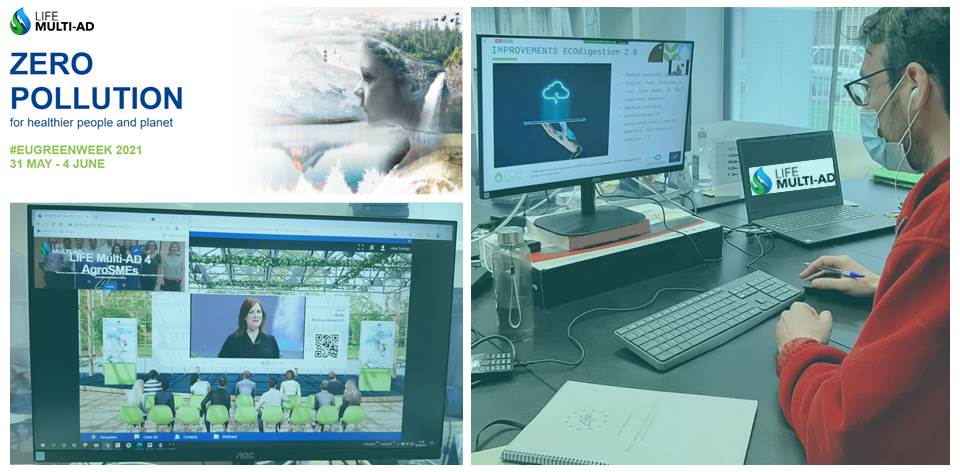
LIFE Multi-AD participates in the European Green Week 2021

LIFE Multi-AD participates in the European Green Week 2021 that has been held virtually from May 31 to June 4 under the slogan “Aspire to zero pollution”. For five days, relevant initiatives for the European Green Deal have been discussed, such as climate initiatives, the future Strategy on Chemical Substances, and initiatives dedicated to energy, industry, mobility, agriculture, fisheries, health and biodiversity .

The European Green Week 2021 has offered the opportunity to the LIFE Multi-AD project to be able to get in touch with other interested parties in achieving a collaboration with which to aspire to zero pollution for an environment without toxic substances. LIFE Multi-AD attended the award ceremony of the best LIFE 2021 projects, as well as the Challenge of circular economy in WWTP for green energy production: LIFE Ecodigestion 2.0.

Posted by Pascal Pierre