Eventos

Se presenta el proyecto LIFE MULTI-AD al sector agroalimentario del territorio occidental de POCTEFA

AEMA da a conocer el diseño de un reactor anaeróbico multifásico de alto rendimiento que produce biogás rico en metano, diseñado a medida para tratamiento de aguas residuales de PYMEs agroalimentarias.

El coordinador de proyectos de I+D+i, Gorka García y el ingeniero técnico comercial, Miguel de Valenzuela, de la empresa AEMA, participaron en el “I encuentro transfronterizo sobre economía circular en el sector agroalimentario” organizado dentro del proyecto ORHI, presentando sus soluciones innovadoras relacionadas con la reducción y/o reutilización de aguas residuales en industrias del sector agroalimentario, destacando los sistemas MBR como tecnología preferente en estos campos.

AEMA es la firma española especializada en tratamiento de aguas y depuración con mayor número de instalaciones ejecutadas y en gestión y mantenimiento, con tecnología MBR, en España y Europa.

La tecnología MBR presenta una serie de ventajas frente a los procesos de depuración convencionales, entre las que destaca la capacidad de reutilizar el agua tratada sin necesidad de tratamientos terciarios

La jornada tuvo lugar en la Cámara de Comercio e Industria de Bayonne Pays Basque (Bayonne, Francia) el pasado 18 de Junio de 2019 con más de 115 participantes procedentes del territorio occidental de POCTEFA, en concreto, de las regiones españolas de La Rioja, Navarra y País Vasco y de las regiones francesas de Occitanie y Pyrénées-Atlantiques. POCTEFA es un Programa Europeo de cooperación territorial que fomenta el desarrollo sostenible del territorio fronterizo España-Francia-Andorra.

Durante el evento, AEMA presentó mediante encuentros bilaterales con empresas y otros organismos oficiales, el nuevo sistema de tratamiento anaerobio enfocado al tratamiento de aguas residuales de pymes agroalimentarias que AEMA está desarrollando a través del proyecto LIFE Multi-AD 4 AgroSMEs (LIFE17 ENV/ES/331) en colaboración con sus socios: Instituto Tecnológico de Aragón (España), Energygreen Gas Almazán S.L (España), Societatea de Inginerie Sisteme S.A (Rumanía) e Institutions et Stratégies (Francia). El foro también permitió el encuentro con otro proyecto del programa LIFE (LIFE MCUBO) para afianzar lazos y buscar sinergias entre las tecnologías desarrolladas.

El principal objetivo del proyecto LIFE Multi-AD 4 AgroSMEs es el desarrollo e industrialización de un sistema totalmente automatizado para el tratamiento de aguas residuales generadas por pequeñas y medianas empresas del sector alimentario. Esta tecnología está basada en el diseño de un reactor multifásico anaeróbico de alto rendimiento patentado por AEMA y su producción será personalizada de acuerdo con las necesidades específicas de cada cliente.

En consonancia con los objetivos del proyecto ORHI, el proyecto LIFE Multi-AD 4 AgroSMEs reducirá el impacto medioambiental de las PYMEs del sector agroalimentario y los costes de operación derivados del tratamiento y gestión de sus desechos.

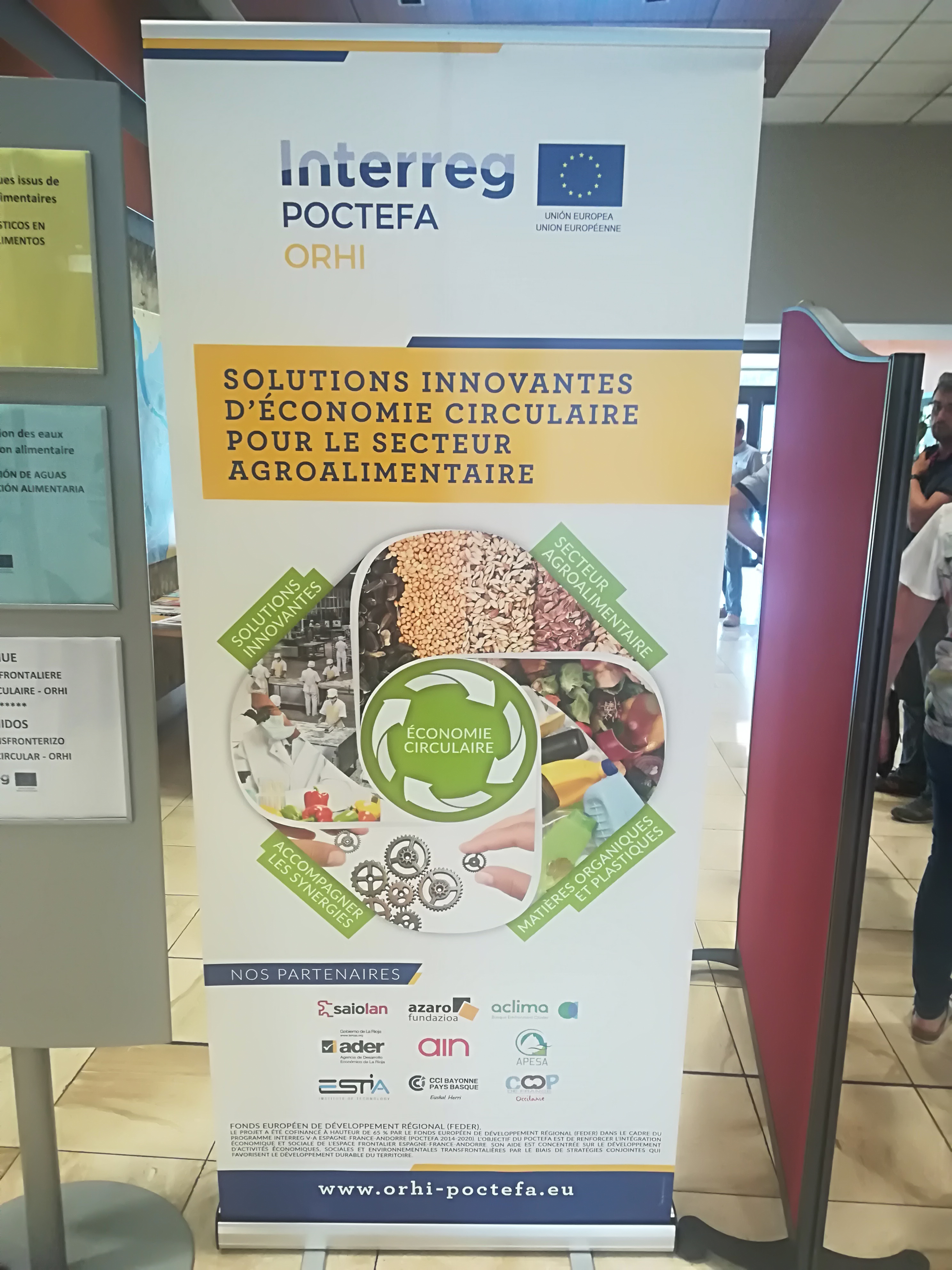
Representantes de LIFE Multi-AD 4 AgroSMEs y LIFE MCUBO.

Posted by Guillermo
eveniment

Proiectul LIFE Multi-AD este prezentat sectorului F & D din zona de vest a POCTEFA

Coordonatorul AEMA a prezentat solutia de proiectare a unui reactor anaerob multifazat de înaltă performanță care produce biogaz bogat în metan, adaptat tratării apelor reziduale ale IMM-urilor agroalimentare.

Coordonatorul proiectului dl. Gorka García și dl. ing Miguel de Valenzuela, din partea firmei AEMA, au participat la evenimentul “Prima întâlnirea transfrontalieră privind economia circulară în sectorul F & D” organizată în cadrul proiectului ORHI, prezentând soluții inovatoare legate de reducerea și / sau reutilizarea apelor reziduale în industriile F & D, accentuând sistemele MBR ca o tehnologie preferențială în aceste domenii.

AEMA este o firma spaniola specializata in tratarea si epurarea apelor cu un numar mare de aplicatii executate si in management si intretinere, cu tehnologie MBR, in Spania si Europa.

Tehnologia MBR prezintă o serie de avantaje față de procesele convenționale de purificare, dintre care se remarca capacitatea de reutilizare a apei tratate fără a fi nevoie de tratament terțiar.

Evenimentul a avut loc la Camera de Comerț și Industrie din Bayonne Pays Basque (Bayonne, Franța) la 18 iunie 2019, cu peste 115 participanți din zonade vest al POCTEFA, în special din regiunile spaniole La Rioja, Navarra și Țara Bascilor și regiunile franceze Occitanie și Pyrénées-Atlantiques. POCTEFA este un program european de cooperare teritorială care promovează dezvoltarea durabilă a teritoriului de frontieră Spania-Franța-Andorra.

În cadrul evenimentului, AEMA a prezentat prin întâlniri bilaterale cu companii și alte organisme oficiale, noul sistem de tratare anaerobă axat pe tratarea apelor reziduale ale IMM-urilor din sectorul F & D, pe care AEMA il dezvoltă prin proiectul LIFE Multi-AD 4 AgroSMEs (LIFE17 ENV / ES / 331) in colaborarea cu partenerii săi: Instituto Tecnológico de Aragón (Spania), Energygreen Gas Almazán SL (Spania), Societatea de Inginerie Sisteme  SIS SA (România) și Institutions et Stratégies (Franța). Forumul a permis, de asemenea, întâlnirea cu un alt proiect al programului LIFE (LIFE MCUBO) ocazie cu care s-au stabilit legături in vederea gasirii de sinergii între tehnologiile dezvoltate.

Obiectivul principal al proiectului LIFE Multi-AD 4 AgroSME este dezvoltarea și industrializarea unui sistem complet automatizat pentru tratarea apelor reziduale generate de companiile mici și mijlocii din sectorul alimentar. Această tehnologie se bazează pe proiectarea unui reactor multifazic anaerob de înaltă performanță patentat de AEMA, iar producția sa va fi personalizată în funcție de nevoile specifice ale fiecărui client.

În conformitate cu obiectivele proiectului ORHI, proiectul LIFE Multi-AD 4 AgroSME va reduce impactul asupra mediului al IMM-urilor în sectorul agroalimentar și costurile de exploatare rezultate din tratarea și gestionarea deșeurilor acestora.

Reprezentant din LIFE Multi-AD 4 AgroSMEs şi LIFE MCUBO.

Posted by Guillermo
Évènements

Le projet LIFE MULTI-AD est présenté au secteur agroalimentaire du territoire occidental de POCTEFA

AEMA fait connaitre le design d’un réacteur anaérobie multiphasique à haute performance qui produit du biogaz riche en méthane, conçu sur mesure pour le traitement des eaux usées de PMEs agroalimentaires.

Le coordinateur de projet de R+D+i, Gorka García et l’ingénieur technicien commercial, Miguel de Valenzuela, de l’entreprise AEMA, ont participé à la « Ière rencontre transfrontalière sur l’économie circulaire dans le secteur agroalimentaire » organisée dans le projet ORHI, présentant ses solutions innovantes liées avec la réduction et/ou réutilisation des eaux usées en industries du secteur agroalimentaire, faisant remarquer les systèmes MBR comme technologie préférable dans ces domaines.

AEMA est l’entreprise espagnole spécialisée sur le traitement des eaux et épuration avec le plus grand nombre d’installations réalisées et en gestion et maintenance, avec technologie MBR, en Espagne et Europe.

La technologie MBR présente une série d’avantages face aux procédés d’épuration conventionnels, entre lesquels on distingue la capacité de réutiliser l’eau traitée sans besoin de traitements tertiaires.

La journée a eu lieu dans la Caméra de Commerce et Industrie de Bayonne Pays Basque (Bayonne, France) le 18 Juin 2019 avec plus de 115 participants provenants du territoire occidental POCTEFA, concrètement, des régions espagnoles de La Rioja, Navarra et Pays Basque et des régions françaises de l’Occitanie et Pyrénées-Atlantiques. POCTEFA est un Programme Européen de coopération territorial qui encourage le développement durable du territoire frontalier Espagne-France-Andorre,

Durant l’évènement, AEMA a présenté par moyen de rencontres bilatérales avec entreprises et autres organismes officiels, le nouveau système de traitement anaérobie focalisé au traitement d’eaux usées des PMEs agroalimentaires  que AEMA développe à travers le projet LIFE Multi-AD 4 AgroSMEs (LIFE17 ENV/ES/331) en collaboration avec leurs partenaires : Instituto Tecnológico de Aragón (Espagne), Energygreen Gas Almazán S.L (Espagne), Societatea de Inginerie Sisteme S.A (Roumanie) et Institutions et Stratégies (France). La foire a permit aussi de rencontrer autre projet du programme LIFE (LIFE MCUBO) pour renforcer les liens et chercher des synergies entre les technologies développées.

Le principal objectif du projet LIFE Multi-AD 4 AgroSMEs est le développement et industrialisation d’un système totalement automatisé pour le traitement des eaux usées produits par des petites et moyennes entreprises du secteur alimentaire. Cette technologie est basée sur le design d’un réacteur multiphasique anaérobie à haute performance par AEMA et sa production sera personnalisée d’accord avec les besoins spécifiques de chaque client.

En cohérence avec les objectifs du projet ORHI, le projet LIFE Multi-AD 4 AgroSMEs réduira l’impact environnemental des PMEs du secteur agroalimentaire et les couts d’opération dérivés du traitement et gestion des déchets.

Représentants de LIFE Multi-AD 4 AgroSMEs et LIFE MCUBO.

Posted by Guillermo
Event

The Project LIFE Multi-AD is presented to the F&D sector of occidental territory of POCTEFA

AEMA presents the design of a high-performance multi-phase anaerobic reactor that produces methane-rich biogas, tailored to wastewater treatment of agro-food SMEs.

The R+D+i projects coordinator, Gorka García and the commercial technical engineer, Miguel de Valenzuela, of AEMA’s enterprise, participated in the “I cross-border encounter on circular economy in the F&D sector” organised in the ORHI project, presenting its innovative solutions related to the reduction and/or reuse of wastewaters in F&D industries, emphasizing MBR systems as a preferent technology in this fields.

AEMA is the Spanish firm specialized in waters treatment and depuration with a greater number of facilities executed and in management and maintenance, with MBR technology, in Spain and Europe.

The MBR technology presents a series of advantages over the conventional purification processes, among which the ability to reuse treated water without the need for tertiary treatment stands out.

The journey took place in the Chamber of Commerce and Industry of Bayonne Pays Basque (Bayonne, France) on June 18, 2019 with more than 115 participants from the western territory of POCTEFA, specifically, from the Spanish regions of La Rioja, Navarre and the Basque Country and the French regions of Occitanie and Pyrénées-Atlantiques. POCTEFA is a European Territorial Cooperation Program that promotes the sustainable development of the border territory Spain-France-Andorra.

During the event, AEMA presented through bilateral meetings with companies and other official bodies, the new anaerobic treatment system focused on wastewater treatment of F&D SMEs that AEMA is developing through the LIFE Multi-AD 4 AgroSMEs project (LIFE17 ENV / ES / 331) in collaboration with its partners: Instituto Tecnológico de Aragón (Spain), Energygreen Gas Almazán SL (Spain), Societatea de Inginerie Sisteme SA (Romania) and Institutions et Stratégies (France). The forum also allowed the meeting with another project of the LIFE program (LIFE MCUBO) to strengthen ties and seek synergies between the developed technologies.

The main objective of the LIFE Multi-AD 4 AgroSMEs project is the development and industrialization of a fully automated system for the treatment of wastewater generated by small and medium-sized companies in the food sector. This technology is based on the design of a high performance anaerobic multiphase reactor patented by AEMA and its production will be customized according to the specific needs of each client.

In line with the objectives of the ORHI project, the LIFE Multi-AD 4 AgroSMEs project will reduce the environmental impact of SMEs in the agri-food sector and the operating costs derived from the treatment and management of their waste.

LIFE Multi-AD 4 AgroSMEs and LIFE MCUBO representatives.

Posted by Guillermo
eveniment

Prezentarea proiectului LIFE MULTI-AD sectorul vitivinicol din regiunea Rioja, Spania

Dezvoltarea sistemului de tratare anaerobă în sectorul vitivinicol
Coordonatorul proiectului, AEMA R+D+i, Gorka García a participat la atelierul “Sisteme inovatoare în managementul și valorificarea subproduselor de vin” organizat de echipa proiectul WETWINE, prezentând strategiile de inovare pentru managementul și valorificarea vărsare efluenți din cadrul proiectului LIFE MULTI-AD.

Seminarul a avut loc la Vinăria Instituțională La Grajera (Logroño) in 6 iunie 2019, iar în același timp s-au prezentat principalele rezultate ale proiectului WETWINE și alte soluții inovatoare pentru tratarea apelor reziduale de vinificație. Domnul Gorka García a evidențiat sistemele MBR ca fiind una dintre tehnologiile care oferă cele mai mari avantaje atunci când vine vorba de gestionarea și valorificarea eficientă a acestui tip de ape uzate și a subliniat inovațiile realizate de AEMA, specialist în tratarea apelor uzate industriale, pentru optimizarea din stațiile de epurare.

Prezentarea a permis descrierea  noului sistem de tratare anaerobă pe care AEMA îl dezvoltă în cadrul proiectului LIFE Multi-AD 4 AgroSMEs (LIFE17 ENV / ES / 331 și cofinanțat prin programul LIFE al Comisiei Europene), colaborând cu partenerii săi, Instituto Tecnológico de Aragón (Spania), Energygreen Gas Almazán SL (Spania), Societatea de Inginerie Sisteme SA (România) și Instituții et Stratégies (Franța). Această tehnologie inovatoare se axează în special pe IMM-urile din sectorul alimentar și al băuturilor și pe particularitățile sale, disponibile din punct de vedere economic și capabile să producă o cantitate mare de energie regenerabilă prin biogaz de înaltă calitate. S-a estimat că acest sistem va putea să reducă aproximativ 13% din CO2 generat într-o stație de epurare convențională a unei fabrici de vinuri.

Posted by Guillermo
Eventos

Presentación del proyecto LIFE MULTI-AD al sector vitivinícola riojano

Desarrollo del sistema de tratamiento anaerobio en el sector vitivinícola
El coordinador de proyectos de I+D+i Gorka García, de la empresa AEMA, participó en el workshop sobre “sistemas innovadores en la gestión y valorización de subproductos vitivinícolas” organizado por el proyecto WETWINE, presentando sus estrategias de innovación para la gestión y valorización de efluentes vitivinícolas.

La jornada tuvo lugar en la Bodega Institucional La Grajera (Logroño) el pasado día 6 de Junio de 2019 y durante la misma se presentaron los principales resultados del proyecto WETWINE y otras soluciones innovadoras para el tratamiento de aguas residuales en bodegas. Gorka García destacó los sistemas MBR como una de las tecnologías que aporta mayores ventajas a la hora de gestionar y valorizar eficientemente este tipo de vertidos e hizo hincapié en las innovaciones que se están llevando a cabo por AEMA, especialista en depuración y tratamiento de aguas industriales, para la optimización de sus plantas depuradoras.

La ponencia permitió presentar el nuevo sistema de tratamiento anaerobio que AEMA está desarrollando a través del proyecto LIFE Multi-AD 4 AgroSMEs (LIFE17 ENV/ES/331 cofinanciado por el programa LIFE de la Comisión Europea) en colaboración con sus socios: Instituto Tecnológico de Aragón (España), Energygreen Gas Almazán S.L (España), Societatea de Inginerie Sisteme S.A (Rumanía) e Institutions et Stratégies (Francia). Esta tecnología innovadora, está enfocada específicamente a pymes del sector agroalimentario y sus particularidades, asequible económicamente y capaz de producir gran cantidad de energía renovable mediante biogás de alta calidad. Se ha estimado que con este sistema  será posible reducir aproximadamente el 13% del CO2 generado en una EDARs convencional de una bodega.

Posted by Guillermo
Évènements

Présentation du projet LIFE Multi-AD au secteur viticole de La Rioja

Développement du système de traitement anaérobie dans le secteur viticole
Le coordinateur de projets en R+D+i Gorka García, de l’entreprise AEMA, a participé dans le workshop sur « les systèmes innovants dans la gestion et la valorisation de sous-produits viticoles » organisé par le projet WETWINE, présentant ses stratégies d’innovation pour la gestion et valorisation des effluents viticoles.

La journée a eu lieu dans la Cave Institutionnelle La Grajera (Logroño) le 6 Juin 2019 et durant la même, les principaux résultats du projet WETWINE et autres solutions innovantes pour le traitement des eaux usées en cave furent présentés. Gorka García a fait remarquer les systèmes MBR comme l’une des technologies qui apporte le plus d’avantages au moment de gérer et valoriser efficacement ce type de déversement et a mis l’accent sur les innovations qui sont en train d’être réalisées par AEMA, spécialiste en épuration et traitement d’eaux industrielles, pour l’optimisation de ses stations d’épuration.

L’exposition a permis de présenter le nouveau système de traitement anaérobie qu’AEMA développe à travers le projet LIFE Multi-AD 4 AgroSMEs (LIFE17 ENV/ES/331 cofinancé par le programme LIFE de la Commission Européenne) en collaboration avec ses partenaires : Instituto Tecnológico de Aragón (Espagne), Energygreen Gas Almazán S.L (Espagne), Societatea de Inginerie Sisteme S.A (Roumanie) et Institutions et Stratégies (France). Cette technologie innovante, est focalisée spécifiquement aux PMEs du secteur agroalimentaire et ses particularités, abordable économiquement et capable de produire des grandes quantités d’énergie renouvelable grâce au biogaz de haute qualité. Il a été estimé qu’avec ce système il sera possible de réduire d’environ 13% le CO2 produit dans une STEU conventionnelle d’une cave à vin.

Posted by Guillermo
Event

Presentation of the LIFE MULTI-AD Project to the Rioja wine sector

Development of the anaerobic treatment system in the wine sector
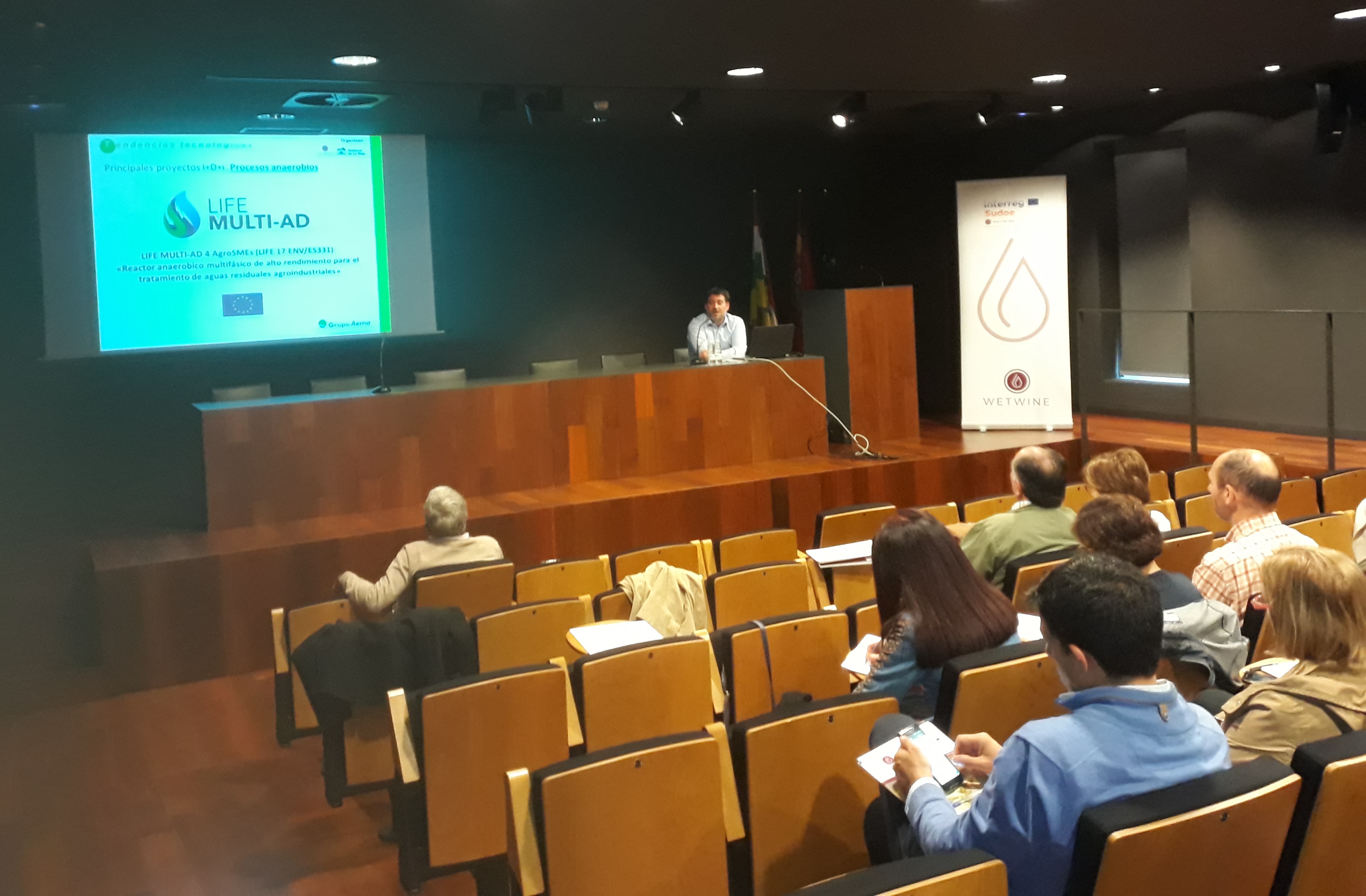
The coordinator of AEMA´s R + D + i projects Gorka García, participated in the workshop on “innovative systems in the management and valorization of wine by-products” organized by the WETWINE project, presenting its innovation strategies for the management and valorisation of winery effluents.

The workshop took place at the La Grajera Institutional Winery (Logroño) on 6th June 2019 and during the same the main results of the WETWINE project and other innovative solutions for the treatment of winery wastewater were presented. Gorka García highlighted the MBR systems as one of the technologies that provides the greatest advantages when it comes to efficiently managing and valuing this type of wastewaters and emphasized the innovations that are being carried out by AEMA, a specialist in industrial wastewater treatment, for the optimization of its WWTPs.
Workshop participants
The presentation allowed to show the new anaerobic treatment system that AEMA is developing throughout the LIFE Multi-AD 4 AgroSMEs project (LIFE17 ENV/ES/331 and co-financed by the LIFE program of the European Commission) collaborating with its partners, Instituto Tecnológico de Aragón (Spain), Energygreen Gas Almazán S.L (Spain), Societatea de Inginerie Sisteme S.A (Romania) and Institutions et Stratégies (France). This innovative technology is specifically focused on SMEs from Food & Drink sector and its particularities, economically available and capable of producing a large amount of renewable energy through high-quality biogas. It has been estimated that this system will be able to reduce approximately 13% of the CO2 generated in a conventional WWTP of a winery.


Posted by Guillermo